Customer case study videos: show the work behind the results
Your customer has a story worth telling. The challenge is making it useful to a prospective buyer without turning the interview into a commercial.
In B2B, especially in manufacturing and technical industries, decisions rarely hinge on a catchy tagline. People want to understand the problem, what changed and whether the experience is relevant to their own operation.
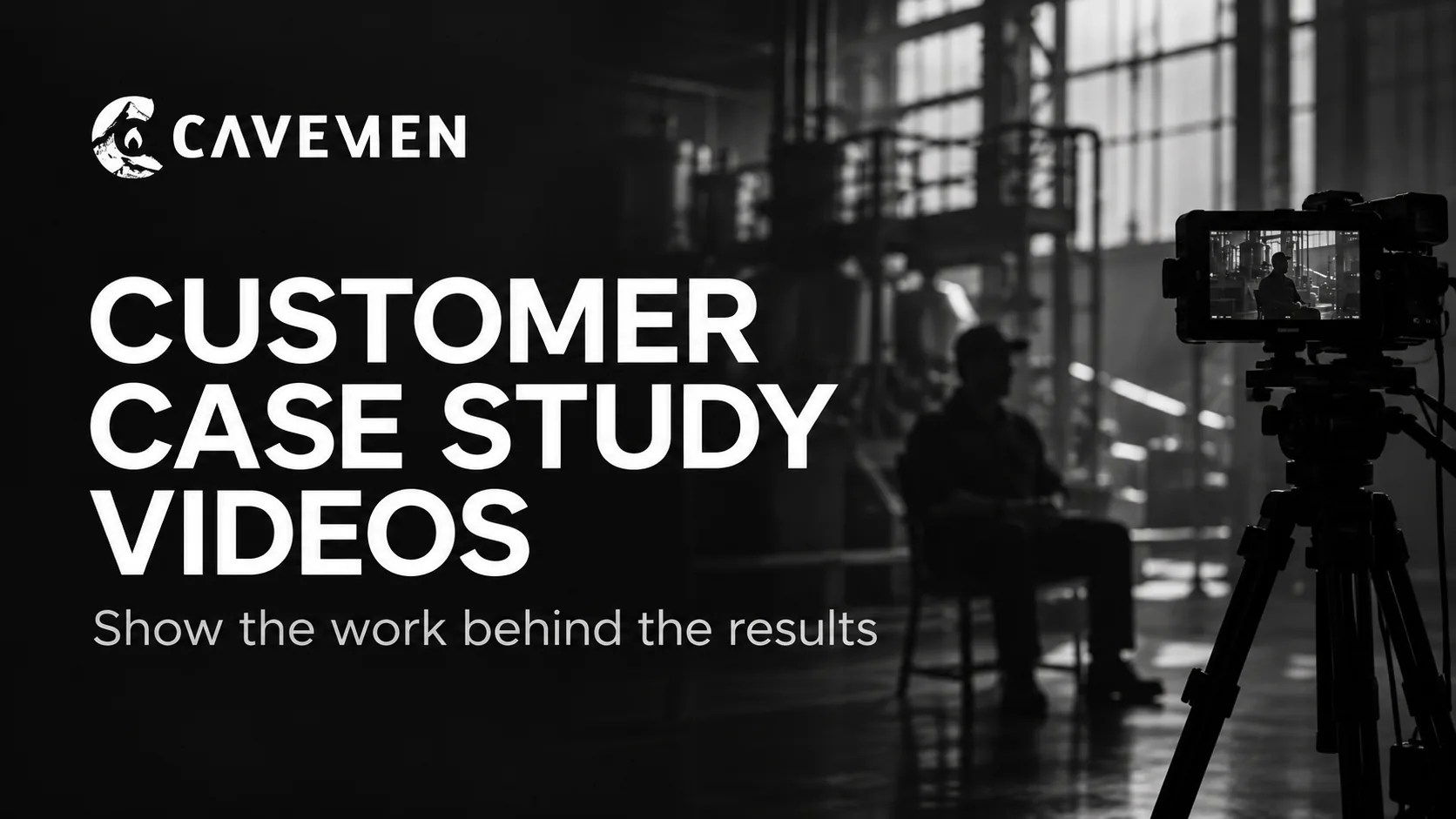
A well-produced customer case study video makes that information easier to see and hear. It gives the customer room to describe their experience while the footage shows the product, process or team involved.
A customer story is more than a testimonial
A testimonial usually captures how someone feels about working with a company. That’s useful, but it doesn’t always answer the next question: What did this solution actually do?
A B2B case study video goes further. It puts the customer in context, follows the work and gives the audience specific reasons to understand the outcome.
“The team was great to work with.”
A real sentiment, but it leaves the viewer to imagine the rest.
“Here’s what we needed, and here’s what changed.”
A concrete experience, supported by footage and information the customer is comfortable sharing.
For operations leaders, engineers and procurement teams, the second approach can be much more informative during evaluation.
Start with what a buyer wants to know
Before asking a customer to appear on camera, find the part of the project that someone else would want to learn from. Maybe the implementation involved a difficult constraint. Maybe a team found a more reliable way to do something. Maybe the biggest result was a simpler workflow.
Not every outcome comes with a number. What matters is whether the customer can describe a specific, credible change.
Questions worth asking before production
- What was happening before the project?
- Why did your team choose this approach?
- What did the implementation look like?
- What can you show or verify today?
Use the answers to shape the interview, not to write lines for someone to memorize. Customers sound like themselves when they have room to think and answer in their own words.
The most convincing moment in a customer story is often a specific detail nobody would think to put in an ad.
Don’t ask the interview to carry the entire video
The interview tells the story. Supporting footage makes it tangible. In a manufacturing environment, that might mean an installed system, a workflow in action, product details or the people using a solution every day.
Each shot should have a purpose. If someone mentions a handoff between departments, show that step when possible. If the story depends on a technical process that’s inaccessible to the camera, animation or restrained motion graphics can help explain it.
What if the customer can’t share performance data?
Many organizations have legitimate confidentiality limits. An approved description of a process improvement, a documented change in workflow or a visible before-and-after can still make a strong story. Never invent metrics to fill the gap, and don’t imply that an illustrated example is measured evidence.
Plan ahead for facility access, safety requirements, releases, brand approvals, restricted equipment and the person responsible for signing off on the final edit.
Make the conversation feel like a conversation
“Would you recommend us?” invites a short endorsement. “Can you walk me through what happened when the new process went live?” invites a story.
Interview direction is about listening, following up and getting comfortable, complete answers. The camera, lighting and sound should support that conversation, not make the speaker feel as though they’re delivering a corporate script.
Editing matters just as much. Keep the customer’s meaning intact, give claims their proper context and let the supporting footage do some of the explaining.
Build the edit around where it will be watched
A case study on a website can take more time to explain the background. A clip shared by a sales rep after a meeting may need only one clear answer. A trade show screen has a completely different viewing environment.
Decide on captions, aspect ratios and language versions before the shoot. That helps the production team plan coverage without treating every possible format as a mandatory deliverable.
Planning a customer story shoot in Mexico?
If your customer, plant or project team is in Mexico while your marketing team is in the US, Canada or elsewhere, the production needs two things: a clear editorial plan and reliable coordination on the ground.
When a project spans multiple facilities, that coordination becomes even more important. Our guide to multi-location corporate video production in Mexico explains how to align site access, interviews and international approvals.
At Cavemen MX, we shoot across Mexico and handle editing, animation and post-production from Mexico for teams around the world. We can coordinate with international producers and in-house marketing teams while keeping the customer interview grounded in what actually happened.
The starting brief doesn’t need to be complicated: tell us where the story takes place, who can speak, what footage is possible, what approvals are required and how the final content will be used.
If your subject is particularly technical, our guide to manufacturing explainer videos covers a related challenge: making complex operations easy to understand.
Let the customer make the point.
A strong customer story doesn’t need big claims or a dramatic script. It needs context, a willing participant and evidence the audience can trust. The production should make that story clear—without getting in its way.