Manufacturing Training Videos: Explaining Complex Processes to Employees and Customers
Manufacturing teams often need to explain the same process to different audiences. A new employee needs practical guidance, while a customer wants to understand how a product is made or a quality standard is maintained. A well-planned video can make both conversations clearer.
That’s where manufacturing training videos and technical explainer videos come in. They help companies turn complex operations into useful content for onboarding, equipment training and B2B customer presentations.
Depending on the process, the right approach might combine real footage, on-screen guidance and animation. The goal is to make information easier to follow without losing technical accuracy.
The key is knowing what the audience needs to learn before deciding what to show.
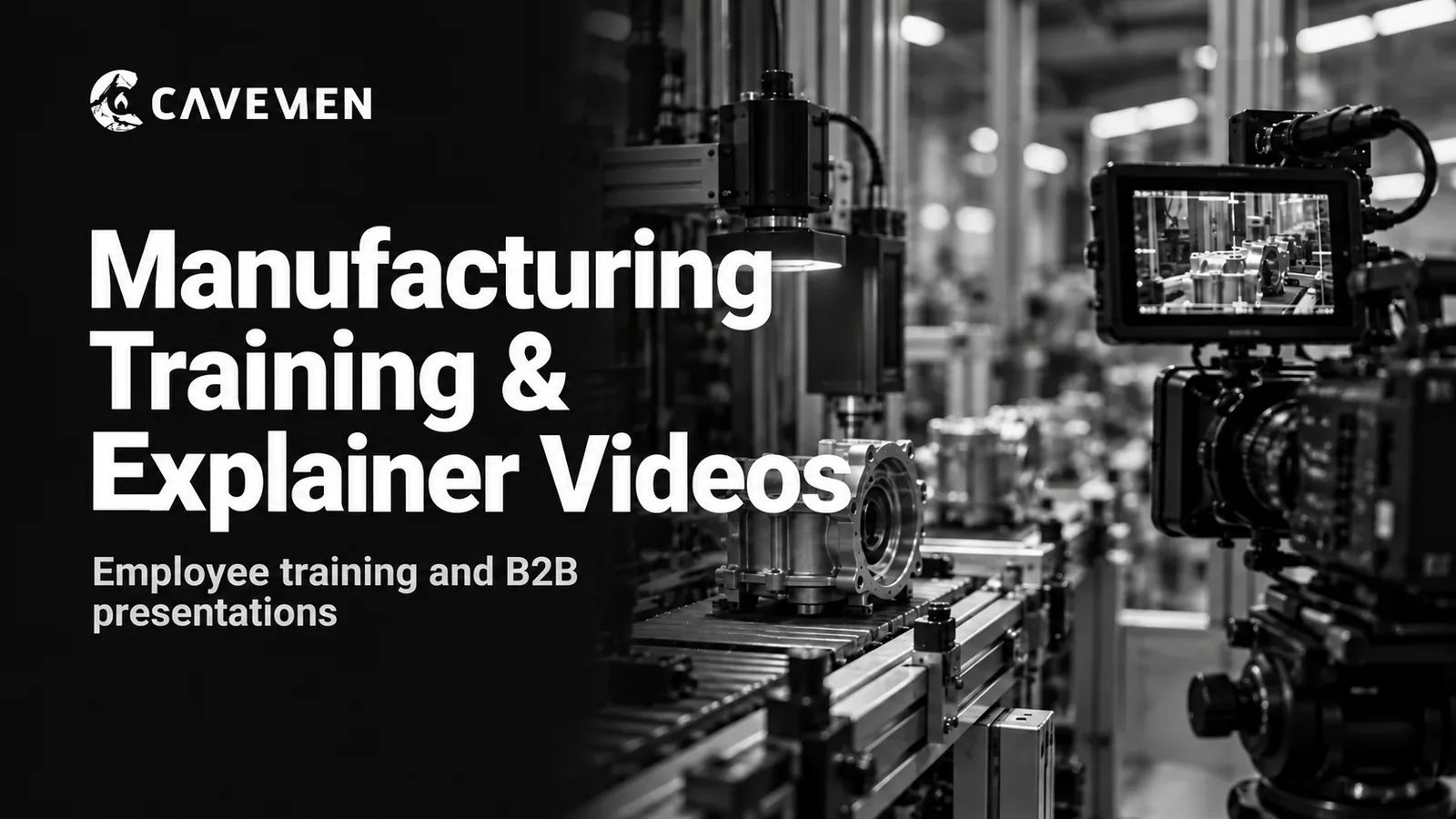
One manufacturing process, two different audiences
Consider an automated quality inspection system on a production line.
For a new employee, the explanation might focus on what the system checks, how to recognize an alert, and what actions to take when a problem is detected.
For a potential customer, the same process tells a different story. They may want to understand how products are inspected, which quality controls are in place, and how the system fits into the overall manufacturing operation.
The equipment hasn’t changed. What changes is the information that matters to the viewer.
Knowing who will watch the video makes the script more focused and helps production teams decide what actually needs to be filmed or illustrated.
Manufacturing training videos for employees
An employee training video for manufacturing should do more than explain a sequence of tasks. It should help viewers recognize equipment, follow the correct steps and understand what they need to pay attention to.
New hires need to recognize equipment, understand how individual steps connect, and identify the details that matter during everyday operations.
Good training content connects those details to the work people do on the factory floor.
Wide shots provide context, close-ups highlight important components, and graphics can guide viewers through each stage of a procedure.
For example, an equipment training video might cover preparation, identifying the controls, operation and final checks. Defining these stages before filming also makes the shot list and review process easier to plan.
Breaking the information into manageable sections also makes the material easier to revisit when employees need a refresher.
Technical explainer videos for B2B customers
For a B2B sales team, the challenge is different: a potential customer may need to understand a supplier’s process or capabilities without going through an entire technical manual.
A buyer may know exactly what they need from a product without fully understanding the equipment, technology, or production methods behind it.
A technical explainer video can show how the process works and why it matters to the buyer, without overwhelming the presentation with unnecessary detail.
Instead of filling a presentation with machinery footage, the content should follow a clear sequence: what the process does, how it works, and why that information matters to the customer.
The objective isn’t to remove the technical details. It’s to give the audience enough information to make sense of them.
This approach works well for B2B sales presentations, technical product demonstrations and discussions with international buyers, particularly when a factory visit isn’t practical.
It also gives sales teams a consistent visual reference they can revisit or share during follow-up discussions.
Live-action, 2D or 3D animation: what works best?
Not every manufacturing process can be explained through camera footage alone.
Choose the format based on what needs to be understood. Live-action may be enough for a procedure on the shop floor; 2D or 3D animation can explain what the camera cannot show.
Live-action video
Real footage works well when the goal is to demonstrate equipment, show employees performing a procedure, or document how a process takes place on the factory floor.
2D animation and motion graphics
Diagrams, labels, and animated graphics can make technical information easier to follow. They’re particularly useful for showing sequences, identifying components, or explaining relationships that aren’t immediately obvious on camera.
3D process animation
Some mechanisms operate inside enclosed equipment or involve movements that cannot be captured clearly with a camera.
3D animation can reveal internal components, illustrate mechanical operations, or demonstrate processes from perspectives that would otherwise be impossible to film.
In many cases, combining live-action footage with animation provides the clearest explanation.
The goal isn’t to make a video more elaborate. It’s to make the information more useful.
What to define before producing a manufacturing video
If you’re planning a manufacturing training video or a technical sales presentation, a focused production brief is the best place to start.
Before filming or developing animation, it’s worth answering four questions:
- Who is the audience? Machine operators, new employees, technical specialists, sales teams, or prospective customers?
- What should viewers understand? Define the main learning or communication objective.
- Which details are essential? Focus on the steps, components, and information that support that objective.
- Who will approve the technical content? Identify the specialists responsible for reviewing accuracy, safety, and any confidential information.
These answers help shape the script, determine whether filming or animation is appropriate, and give the production team enough context to estimate the scope of work accurately.
Clear communication starts with understanding the process
A manufacturing process can be technically sophisticated without requiring an equally complicated explanation.
Whether the audience is learning how to operate equipment or evaluating a potential supplier, the principle remains the same: show the right information, in the right order, with the right level of detail.
At Cavemen MX, we produce manufacturing videos, training content and 2D/3D animation for companies that need to explain what they do. We start with the audience and the message, then decide how best to show the process.
If you’re considering a training or explainer video, tell us who it’s for and what needs to be understood. Explore our video production services or our industrial 2D and 3D animation work, and share the basics of your project.
You can also explore three practical uses for industrial video production to see where this type of content can help.